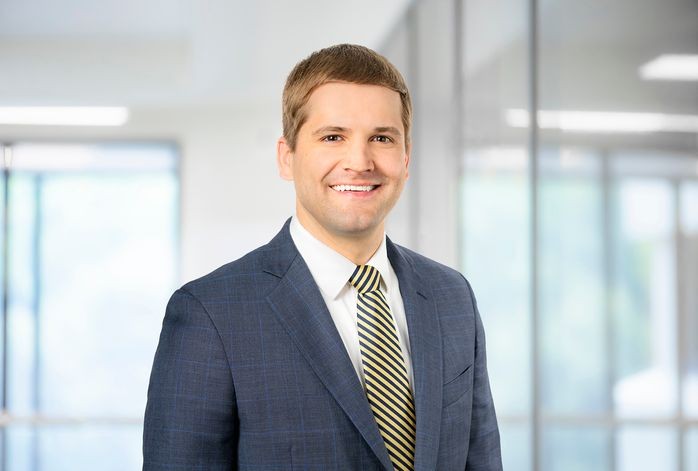
New Partner Spotlight: Timothy Horn
Press Releases
11.02.2026
For Tim Horn, trusts and estates law is about much more than wills, trusts, and tax planning. It's about helping people protect what they've built, plan for the people they care about, and navigate some of life's most important and challenging moments. Whether advising clients on their estate plans, helping business owners prepare for the future, or guiding families through the administration of an estate, Tim finds the greatest reward in helping people make informed decisions and providing peace of mind. As we recognize his recent promotion to partner, we asked Tim to share what makes his practice meaningful, why planning ahead matters, and what he's passionate about outside the office.
Describe your practice in plain language, as if you're explaining it to someone at a dinner party who has no idea what lawyers actually do.
I help people plan for what happens to their family, their assets, and their businesses when they die or become unable to manage their affairs themselves.
A big part of my practice is helping people put a plan in place while they are alive. That can mean something as straightforward as preparing a will, powers of attorney, and advance directives, or it can involve much more complicated planning for a family with significant wealth, a closely held business, or assets that need to be managed for children and future generations. I help clients think through who should receive their assets, when they should receive them, who should be in charge of managing their assets when they’re gone, and how to structure everything so their wishes are actually carried out.
For business owners, I also help answer a very practical question: “What happens to my business when I’m not here?” The client and I work through who will own it, who will run it, whether family members are going to take over, whether the business should eventually be sold, and how to make that transition without unnecessarily disrupting the business or the family. The goal, whenever possible, is to preserve what someone has usually spent a lifetime building while giving the next generation a workable path forward.
There is also a significant tax planning component to what I do. I look at how assets can be transferred in the most tax-efficient way, including estate, gift, generation-skipping transfer (GST), inheritance, and income tax considerations. Sometimes that means using trusts or making gifts during someone’s lifetime; sometimes it means structuring ownership of a business differently or coordinating insurance, charitable giving, and other assets. The tax planning is important, but it is ultimately a tool for accomplishing the client’s larger goals, not the goal in and of itself. That’s why my clients frequently will hear me use the adage, “Don’t let the tax tail wag the dog.”
The other and probably most important part of my practice begins when someone passes away. That’s often when people need a lawyer the most. A family may be dealing with the loss of a parent, spouse, child, or other loved one while simultaneously trying to figure out what happens to the house, investments, business interests, bank accounts, personal property, taxes, and everything else that person left behind.
I help the people responsible for handling all of that (commonly referred to as a “fiduciary”), including executors, administrators, personal representatives, and trustees, understand what they are supposed to do and make sure the estate or trust is administered properly. That typically includes going through the will or trust in detail, identifying and valuing assets, dealing with creditors, preparing the requisite court filings and tax returns, handling tax issues, helping the fiduciary with managing or selling assets, preparing accountings, and ultimately advising the fiduciary with respect to distributing a person’s assets to the people who are supposed to receive them.
I also advise trustees and beneficiaries after a trust has been created while someone is still alive. A trustee may have questions about what the trust allows them to do, how they should invest or distribute assets, or what their responsibilities are to the beneficiaries. A beneficiary may have questions about what they are entitled to receive or how a trust is supposed to work. Sometimes the interests of the people involved don’t line up, and part of my job is helping navigate those issues and, whenever possible, keeping a disagreement from becoming a bona fide family dispute or turning into litigation.
The wills, trusts, tax returns, court filings, and other documents and technical work are the mechanics. The bigger picture is helping a person preserve what they have built, carry out their wishes, and make the transition as orderly as possible for the people they leave behind. That’s what I particularly enjoy about trusts and estates work. I deal with very technical areas of trust, estate, and tax laws, but, at the end of the day, I’m really helping families make important decisions about their future, and then helping them implement those decisions at some of the most important and difficult moments of their lives. It’s by far the most rewarding aspect of my job.
Outside the office, what are you passionate about?
Outside the office, I’m a big Philadelphia sports fan, particularly the Flyers. I was born and raised in the Philadelphia area, and ice hockey has been a huge part of my life for as long as I can remember. I played competitive travel hockey growing up and simultaneously played for my middle school and high school teams, and then at the collegiate level, so hockey will always be a huge passion of mine.
When I can find the time, I also enjoy spending time outdoors, skiing, golfing, and trying different restaurants. Most importantly, though, I enjoy spending time with my wife and daughter. These days, family time is my favorite way to spend my time outside of work.
Estate planning is something a lot of people put off. What do you tell someone who keeps saying they'll get to it eventually?
I tell everyone that estate planning is one of those things you should do as soon as possible, because you simply don’t know what the future holds. None of us has a crystal ball, and waiting another day can mean waiting until it’s too late.
A common misconception is that if you don’t have a will, everything will automatically go to your spouse. That isn’t necessarily the case. If you die without a will, the state’s intestacy laws determine who receives your assets, and the answer depends on your particular family circumstances. You don’t get to make those decisions after you’re gone; rather, the state will make them for you.
And estate planning isn’t just about deciding who gets your money. If you have minor children, you should have a plan for who you want to serve as their guardian and who you want to manage assets for them. You should also think about who you trust to serve as your executor or trustee. Putting those decisions in writing can help avoid uncertainty, family disputes, court intervention, and unnecessary expense at an already difficult time.
So my advice is simple: the right time to put together an estate plan is now. You can always revise it (and should revise it) as your circumstances or the law changes. But once something happens, you don’t get the opportunity to go back and put your desired plan in place. Ultimately, your family, and any other beneficiaries you intend to benefit, will be forever grateful that you thought of them and memorialized your wishes for their benefit.
What's the most common misconception people have about wills and trusts?
I think the most common misconception I come across is that wills and trusts are simple documents that you can simply fill in with a few names and percentages. Clients frequently tell me, “I just want a simple will” or “I just need a simple trust,” and my response is usually, “I’m not sure what you mean by simple.”
What might seem simple at first blush can actually involve a lot of important decisions. For example: Who should inherit? What happens if one of your beneficiaries dies before you do? At what age should children or grandchildren receive their inheritance? Who should manage the money if they are too young or unable to manage it themselves? What happens if you have a family business, a second marriage, a special family circumstance, or significant retirement or life insurance assets? How do we coordinate all of those assets with the will or trust? And, depending on the circumstances, are there estate, inheritance, gift, or other tax considerations that should be addressed?
A will or trust is really just the end product. The more important part of my job is asking the questions clients may not have thought about and making sure the plan works not just under the limited circumstances they are envisioning today, but also if life takes an unexpected turn.
Consequently, when someone tells me they want a so-called “simple” will or trust, I don’t necessarily disagree with them. They may ultimately have a relatively straightforward plan. But getting to a plan that is truly simple, clear, and works the way they intend often requires a lot more thought than people initially realize.
Related People
Related Services
Featured Insights

12.14.2026
Speaking Engagements & Seminars
Hot Trends in Estate Litigation 2026
Estate litigation is constantly evolving. Knowing the latest trends and developments can often mean the difference between winning or losing the cases you handle. Archer partner Anthony La Ratta will be a speaker at the NJSBA’s annual seminar on hot trends in estate litigation....
11.12.2026
Speaking Engagements & Seminars
Professionalism & AI - Don't Let a Robot Cause You to Get Disbarred
Partners Andrew Cevasco, Anthony Talarico, and Gianfranco Pietrafesa will present “Professionalism & AI – Don’t Let a Robot Cause You to Get Disbarred” at the Bergen County Bar Association’s Annual Professionalism in the Law CLE & Dinner, the signature event of the BCBA’s Committee on Professionalism in the Law....
11.05.2026
Speaking Engagements & Seminars
IRC Section 1202: Unlocking the Potential of Qualified Small Business Stock
As part of the New Jersey State Bar Association’s 2026 Federal Tax Law Symposium, partner Bonnie Diaz will present a focused session on the planning opportunities and considerations surrounding Qualified Small Business Stock (QSBS) under IRC Section 1202....
